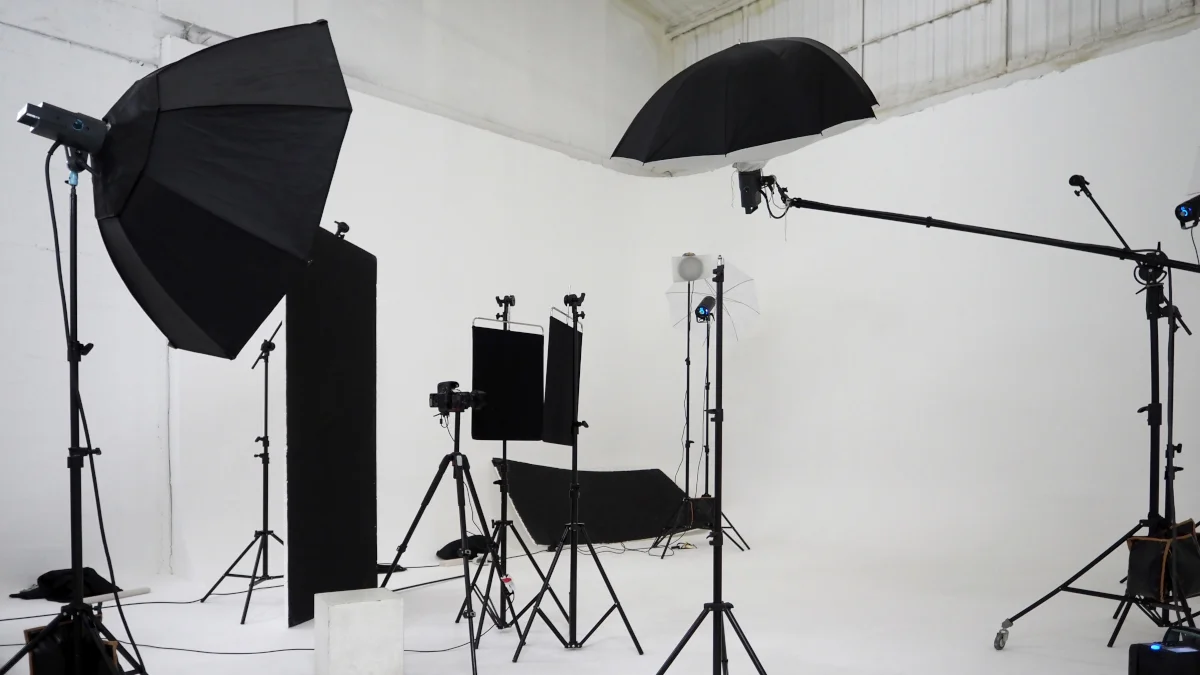
Lighting is the single most important element in cinematography after composition. The camera does not capture objects; it captures light. How you shape, direct, soften, and balance light determines mood, depth, texture, and emotional impact. Poor lighting flattens a scene and reveals flaws, while thoughtful lighting creates dimension, separates subjects from backgrounds, and tells a story visually.
Even with small sensor cameras like smartphones or mirrorless models, smart lighting decisions can produce professional looking results far beyond what automatic settings achieve.
White Balance
White balance controls colour temperature so whites look truly white instead of blue, orange, or green. Incorrect white balance makes skin tones look unnatural and the entire image feel off.
Set white balance manually whenever possible:
- Use a grey card or white object under your lighting setup
- Match presets to your dominant light source (daylight, tungsten, LED)
- In mixed lighting, gel lights or correct in post (but get it right in camera for best quality)
Light Direction
Direction defines form and depth. The key principle is simple: avoid flat, frontal lighting.
- Flat light occurs when the main light comes directly from the camera position. It eliminates shadows, removes dimension, and makes subjects look two dimensional.
- Move the primary light (called the key light) to the side and slightly above the subject. This creates natural shadows that sculpt facial features and add contrast.
- Ideal placement: roughly 30 to 45 degrees to one side and 30 to 45 degrees above eye level.
- The classic goal on the shadow side of the face is the Rembrandt triangle: a small inverted triangle of light on the cheek opposite the key light.
Practice different angles. Small changes in position dramatically alter mood and character.
Light Intensity
Intensity is the amount of light falling on your subject. Balance is everything.
- The subject should generally be brighter than the background to draw attention and create separation.
- Too much overall light flattens contrast; too little makes the image noisy (especially on small sensors).
- Control intensity with distance (light falls off quickly), dimmers, or ND gels/filters.
- Expose for the subject’s face, not the brightest or darkest area.
Light Quality
Quality refers to how hard or soft the light appears.
- Hard light comes from small, direct sources (bare bulb, direct sun) and creates sharp, distinct shadows that emphasise texture, wrinkles, and imperfections.
- Soft light comes from large, diffused sources and produces gentle, gradual shadows that flatter skin and hide flaws.
Most practical lights are hard by nature. Soften them by:
- Increasing the apparent size of the light source (move it closer or use a larger modifier)
- Adding diffusion (softbox, diffusion panel, bedsheet, shower curtain, or even parchment paper)
- Using natural diffusers: shoot during golden hour (sunrise/sunset), under cloud cover, in open shade, or through windows with sheer curtains
Avoid shooting outdoors under direct midday sun: the light is harsh, intense, and comes straight down, creating deep eye shadows and unflattering contrast.
The Three Point Lighting Setup
The foundation of professional lighting for interviews, portraits, commercials, and narrative work.
-
Key Light
The main light and usually the brightest.
Positioned in front, above, and to the side of the subject (Rembrandt placement preferred).
Always diffused (softbox, umbrella, diffusion frame).
Avoid placing it too high to prevent raccoon eye shadows under the brows. -
Fill Light
Placed on the opposite side of the key light to control shadow depth.
Less intense than the key (typically 1/2 to 1/4 strength).
Too much fill creates flat, broad light; too little creates harsh contrast.
Options: another diffused light, reflector bouncing the key light, or white card/bedsheet bounce.
Many cinematic looks skip heavy fill for moodier shadows. -
Back Light (Rim Light / Hair Light)
Placed behind the subject, often high and slightly to one side.
Creates a bright outline (halo/rim) that separates the subject from the background.
Prevents the subject from blending into dark backgrounds.
Keep it subtle; overexposure creates distracting halos.
Pro Lighting on a £150 Budget
You can achieve cinematic results with minimal gear.
-
Choose your subject position first.
Aim for symmetry if appropriate, and always create depth by separating subject from background. -
Frame the shot cleanly.
Use a tripod or stabiliser.
Enable gridlines for straight horizons and balanced composition. -
Set up your key light at roughly 45 degrees to one side and 35 to 45 degrees above.
Diffuse it (5 in 1 reflector, diffusion panel, or even a white bedsheet stretched on a frame).
Move the light farther back from the diffuser for softer results. -
Add fill with a reflector or second light (lower power or farther away).
Use backlight (small LED or phone torch bounced off ceiling/wall) for separation. -
Clean the background.
Remove distractions and consider adding subtle accent lights (warmer colour temperature) behind the subject for depth and interest.
Additional low cost tips:
- Use household items: white foam boards, aluminium foil, black wrap, parchment paper
- Shoot near large windows during golden hour or overcast days
- Control spill with black flags (black card, duvet, bin bags)
Final Thoughts
Lighting is practice more than equipment. Start with one light and learn how direction, distance, and diffusion change everything. Add fill and backlight only when needed. Watch how shadows fall, how skin renders, and how the subject feels emotionally.
Master these fundamentals and even modest setups will produce depth, mood, and professionalism far beyond automatic camera settings.
About the Author
Written by Neil Huyton. Sheffield-based web developer and creator. I build sites with JavaScript/TypeScript, shoot video, and fly drones. Sharing what I’ve learned along the way.